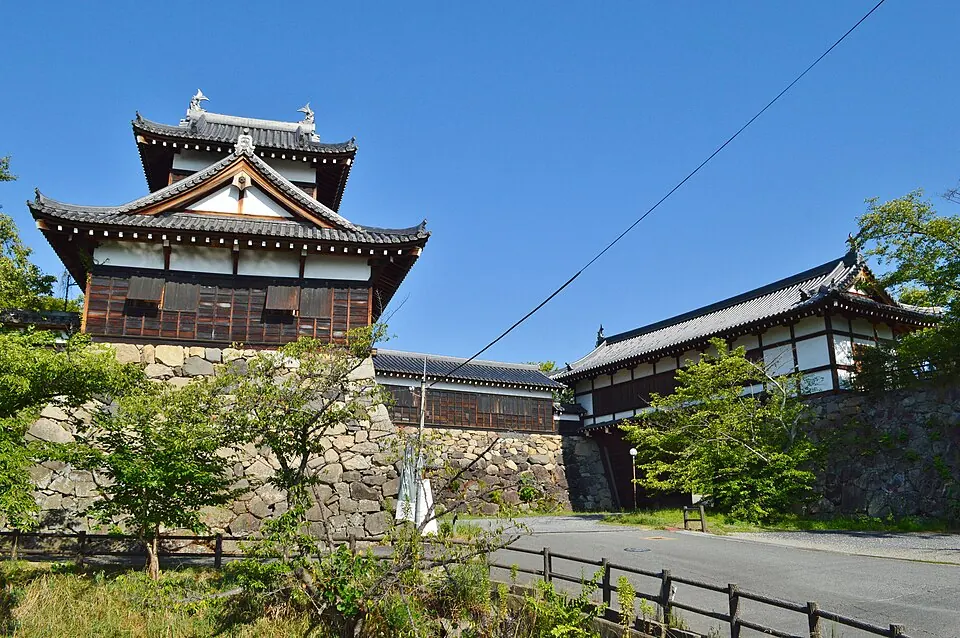
Tamonyama Castle, built by Matsunaga Hisahide in Nara, was an advanced hillside castle with stone walls and tiled buildings.
History
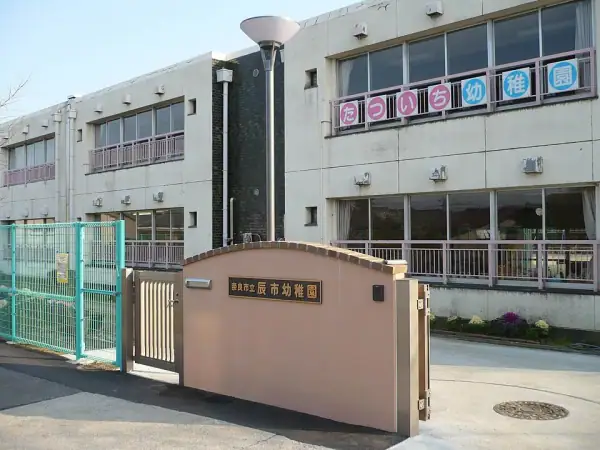
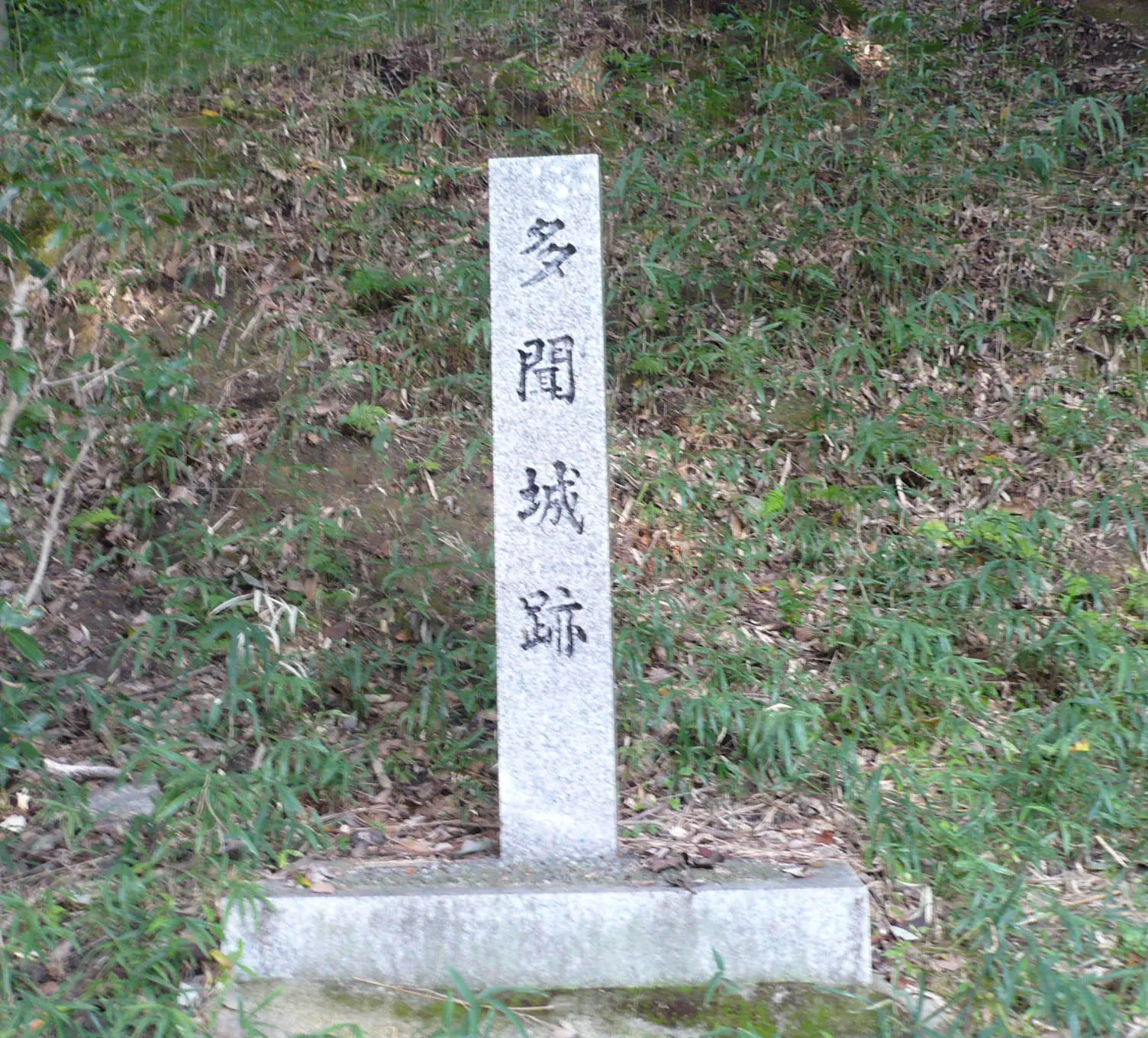
Tamonyama Castle stood on a 115-meter hill in Nara, above the road into the city and within sight of Todai-ji and Kofuku-ji. Matsunaga Hisahide began building it in 1559, moved in in 1561, and finished it in 1564. Unlike earlier medieval castles, it used stone foundations and walls throughout, with thick plastered walls and tile-roofed buildings. The main enclosure held lavish halls and was called the finest castle in western Japan. Long, barrack-like turrets on the stone walls are said to be the origin of the tamon-yagura. Hisahide fought the Miyoshi triumvirate and Tsutsui Junkei, winning the 1567 battle at Todai-ji, but later turned against Oda Nobunaga. In 1573 he surrendered after being surrounded by Sakuma Nobumori's army and the castle passed to Nobunaga. It was torn down in 1577, so it lasted only about sixteen years; its buildings went to Kyoto and its stones to other castles. The site is now a junior high school.
Highlights
- Advanced stone walls and tiled buildings
- Said to be the origin of the tamon-yagura turret
- Matsunaga Hisahide's base for ruling Yamato
Map
Sources
- Wikidata(座標)(CC0) / retrieved 2026-10-04
- Wikipedia「多聞山城」(参照)(CC BY-SA 4.0) / retrieved 2026-10-03
- Photo: Tamonj3.jpg(投稿者が撮影 / CC BY-SA 3.0)